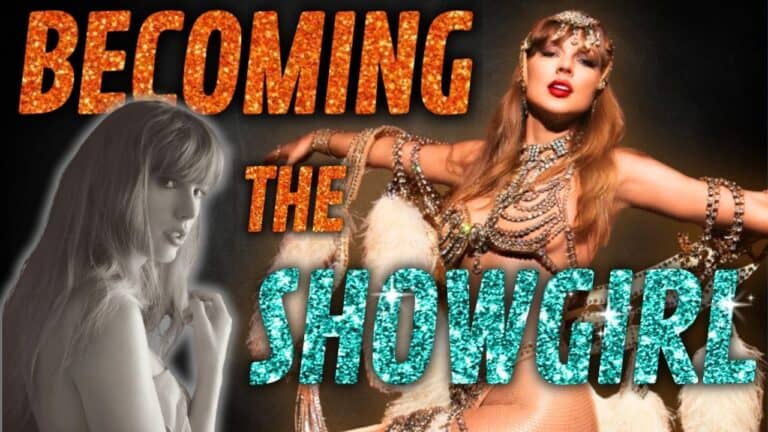
Every Hidden Meaning in The Fate of Ophelia Music Video
Podcast Episode: February 5, 2026
Episode Description
Think you caught every Easter egg in Taylor Swift’s “The Fate of Ophelia” music video? Think again.
In this episode of the Swiftly Sung Stories Podcast, Jen takes you on a meticulous, frame-by-frame deep dive into one of Taylor’s most layered and intricate music videos yet. Together, we unpack the artistic references, hidden metaphors, and symbolic details woven throughout – from Pre-Raphaelite paintings to Busby Berkeley–inspired choreography, and everything in between.
This episode goes way beyond spotting references. We’re talking about how Taylor takes Ophelia – a character who never really gets a say in her own story – and gives her something different. We break down how every visual choice fits into Taylor’s bigger narrative, and what this video reveals about how she sees herself now as a showgirl, a storyteller, and a celebrity. In the end, this isn’t just a fun Easter egg hunt – it’s a statement about agency, performance, and who gets to write the ending.
This episode unravels the storytelling precision that makes “The Fate of Ophelia” Taylor Swift’s true magnum opus of Easter eggs – no English degree required.
✏️In this episode, you’ll learn:
- Every Easter egg Taylor left us, why, and what they really mean
- Which paintings she’s recreated, and the significance behind them
- How this video connects to the Fortnight music video, and what we might expect from the Opalite music video
- Which characters from classic literature Taylor uses to tell her own story
- And so much more!
Listen to the Episode
Episode Resources
- Behind the Scenes: The Making of The Fate of Ophelia Music Video
- Busby Berkeley
- Pre-Raphaelite Brotherhood
- John Everett Millais’ Ophelia painting
- Friedrich Willhelm Heyser’s Ophelia painting
- Gilmore Girls: The Festival of Living Art
- John Willam Waterhouse, The Lady of Shallot painting
- Alfred Lord Tennyson, “The Lady of Shallot” poem
- Travis Kelce’s “kiss, marry, kill” interview
- The Life of a Showgirl Prologue Poems
- The Sirens and Ulysses, William Etty painting
- Miranda, The Tempest, painting by John William Waterhouse
- Marjorie Finlay
Episode Transcript
“Every Hidden Meaning in the Fate of Ophelia Music Video”
Swiftly Sung Stories Podcast Episode: February 5, 2026
You think you got every easter egg in The Fate of Ophelia music video? You think you know what it all means? Think again.
This video is Taylor’s magnum opus of easter eggs, and every single frame is chock full of meaning, and metaphors, and today I’m going to try to uncover them all. Every artistic reference, every little piece of symbolism, every blurry little bit in the background, every costume, every tiny detail.
Today on the Swiftly Sung Stories podcast, we’re diving into the Fate of Ophelia music video so deep that you’re going to need a life preserver to pull you out. It’s a good thing Taylor has those locked and loaded. Let’s go.
(00:49) Background: What Taylor’s Told Us About the Concept for the Music Video
First, let’s set the scene with what we know about the making of this video. In the Release Party of a Showgirl, we got to see behind the scenes, and Taylor gives us some context right up front about her concept. She says:
“The idea I came up with for this music video was sort of a journey throughout all these different ways in which over time periods, historically, you could be a showgirl. Like how you would be in the public eye back during the 1800s where you’d sit for a Pre-Raphealite painting, or you could be a showgirl by being a cabaret burlesque club performer. You could be a theatrical actor putting on a performance. You could be a Vegas showgirl. You could be one of the girls in the Busby Berkeley, you know, screen siren era of the 30s and 40s. You could be a pop singer on The Eras Tour. So it’s kind of a journey through all these different time periods and different characters, really.”
She just said a whole lot, so let’s unpack it. Her vision is to take us on a journey through time, and meet all of these different types of showgirl characters, and in this interview, she’s just listed every character we’re about to see in the video. She’s taking us on a trip through the eras of a showgirl, after she’s taken us on a journey through her eras on the eras tour. The eras are era-ing, and as she’s just told us, she’s going full meta in this video.
But what I found most interesting is how she defines showgirl in this interview. She equates being a showgirl with being in the public eye in this quote. That’s what’s in her head when she conjures a showgirl in her mind, is someone in the public eye. So the life of a showgirl is really the life of a celebrity. I think we all kind of felt that, intuitively, from this album, but it’s cool to hear her confirm it. Showgirl equals celebrity, and she’s going to show us all these different eras of female celebrities in the video.
Now, I think we all know these common forms of showgirls throughout history, but there’s two things that we might need a bit more context around, the first being the pre-raphelite painting, and the second being the busby berkeley reference.
A pre-raphelite painting is a genre of painting, it was an artistic movement of the mid-1800s in which this group of painters and poets decided to reject what was happening in the art world because they thought it was boring. They were rebels, and they started painting differently using vivid colors and really realistic depictions of the human form and of nature. It’s called pre-raphelite because they wanted to go back to a time before art became boring and monochrome during the renaissance, and the renaissance really started with raphael. We’re going to see references to a few pre-raphelite paintings in this video.
Busby Berkeley, whom Taylor is going to mimic in the life preserver dance in the video, was a choreographer and film director in the 30s and 40s who was known for these elaborate showgirl dances. He choreographed complex geometric patterns that formed this quote unquote kaleidoscope of legs. And this is important, this choreographer she’s referencing, because there is a lot of kaleidoscope imagery in the album, first on the cover, where the bathtub image is fractured into these geometric pieces, and in every lyric video and visualizer video, where we see Taylor essentially through a kaleidoscope lens. So I think that’s what she’s partially referencing with all of this imagery, but there’s also a larger significance of the kaleidoscope that we’ll get into when we dive into the music video.
One interesting quote I found about Berkeley was: “Berkeley always denied any deep significance to his work, arguing that his main professional goals were to top himself and never repeat his past accomplishments.” I don’t think Taylor would agree to the lack of significance in her work, and I certainly don’t, but I think we know that our favorite girl is always trying to top herself in everything she does, and she definitely does in this music video, that’s for sure.
So she’s told us what her goals were for the storytelling of this music video, showgirls through the eras, but what about her larger story that she tells in all of her videos? Because just like her albums connect last song to first song, her music videos sometimes do the same thing.
In the end of the cardigan music video, for example, she’s sitting cold and alone at the piano. Then in the beginning of the willow music video, it picks up where cardigan left off. We’re in the exact same shot, her alone at the piano, soaking wet. Willow ends with her walking out the door of the folkmore cabin, walking away from us hand in hand with her lover.
The music video that comes chronologically after willow is Anti-hero. And anti-hero picks up where willow leaves off, etc. She’s facing away from us, sitting at a table. But now, she’s alone. The lover is gone. So when we’re talking about Taylor’s storytelling, it’s crucial to look at the whole trajectory so we can get the complete picture, because she is writing this larger narrative and connects them all together.
So specifically in her music video storytelling, where were we before The Fate of Ophelia?
Where we left off in her scripted music videos was with Fortnight, and I’m not counting the I Can Do it With a Broken Heart music video because that was more of a trailer for the docuseries and wasn’t a big scripted production like her others. Fortnight is, of course, her video that takes place inside the tortured poets department, where they study the minds of poets to try to figure out what’s wrong with them.
Post Malone plays her fellow tortured poet and love interest in the video, and in the very last scene in the Fortnight music video, she’s nearly drowning in the rain. She touches Post Malone’s hand, which reflects the line “it won’t start up til I touch, touch, touch you,” but this imagery shows us that the touch is what’s going to save her. She’s isolated on top of a phone booth on a cliff in the pouring rain, and there’s a potential for her to drown, but there’s also a potential for her to be saved.
So keep that in mind as we dive into Ophelia, she was previously drowning and in danger, but there was this glimmer of hope. And that’s exactly where we’re going to pick up in The Fate of Ophelia. So let’s get into the first scene in our frame-by-frame analysis.
(07:15) Scene 1: Taylor’s Theatrical Landscape
As the video starts, we’re in this elaborate art-deco theatre. So she’s setting up the world in which the life of a showgirl is taking place. And most of her videos for each album seem to take place inside the same narrative world, so I wouldn’t be surprised if we do get any more videos for this album, they take place inside this theatrical landscape in one way or another.
We start off with a wide shot of the lobby of this theatre, and the first thing we notice is that in the center, Ophelia is written on the carpet. That’s our first obvious easter egg, but there’s many more to come. In this scene there’s a person vacuuming next to a cleaning cart, I think it’s dancer Sam from The Eras Tour, and the cleaning cart is of course also a reference to The Eras Tour – her little hidey hole in which she was transported to the stage – but there’s also significance to this cleaning going on. It’s a metaphor for after the show ends. After The Eras Tour has ended. There’s glitter on the floor after the party, and we’re cleaning it up.
She’s left us a ton of easter eggs in this opening shot alone, so let’s go top to bottom. This opening scene was filmed at the Los Angeles theatre, where Taylor also shot some scenes for Delicate, so there’s our first reference to reputation, and we’ll see a few more.
So up on the balcony in the center, behind the giant chandelier, there’s an old-timey portrait of Taylor with Max Martin and Shellback, who were who she wrote and produced this album with. Oh the railings of the balcony, there’s the word “The” in the design of the railing on the left, and “fate” on the right railing. Then as we move down the stairs in the center, the word “of” is in the carpet, and then of course the center of the carpet near our cleaner is the word “Ophelia”. So she’s spelled out the title in a really clever way across the theatre.
Some Swifties have pointed out that the mirrors that are on either side of the balcony look like the fire heart emoji that was used in promoting this album on socials, and they do kind of look like that, but these are just existing decor in this theatre so I think it’s happenstance and luck instead of intentional.
Down under the balcony, there are four posters in these ornate gold frames. They’re really hard to see, but the poster on the far left says “female rage”. It’s really hard to make out what image of Taylor is used in that poster, but “female rage: the musical” is what we’ve coined the tortured poets department set in The Eras Tour. Taylor actually trademarked it, so let’s hope she uses it at some point!
Then next to that on the right there’s an image of her during the Busby Berkeley life preserver scene, and then on the other side of the stairs, the 3rd poster says “Wood,” which is our easter egg for that song, but that image and the image of the 4th poster are also hard to make out. But with the “wood” reference, we get the sense that maybe she’s going to leave us an easter egg for every song. And I think she does, though some are more obvious than others.
On the righthand side of the lobby in another ornate gold frame is the original Ophelia painting, by John Everett Millais, painted in 1851. We’ll get into the significance of that in a moment. And then mirroring the original painting on the other side of the lobby is Taylor’s Version of Ophelia, which we’re about to zoom into. So on the right is the original, and on the left is Taylor’s version. The original fate of Ophelia, versus Taylor’s rewritten fate of ophelia.
Just as we start to focus our perspective on Taylor in this painting is when the drums for the song kick off, so that’s our cue that this painting is important and the action is starting.
(11:02) Scene 2: Drowning Ophelia
So we zoom through this huge frame, and we see it’s Taylor, in a white flowy gown, laying inside this painted backdrop.
Taylor IS the drowning, or not-quite-drowning Ophelia. She looks incredible, and I remember being in the theatre for the release party and this was one of the moments where the entire audience gasped.
But this doesn’t look much like the style of the original, super famous Millais Ophelia painting she just showed us in the lobby of the theatre. And even though she’s definitely referencing it, especially on the album cover, it seems she’s also drawing inspiration from another, less well known artist. So let’s have a look at another Ophelia painting. This is Friedrich Wilhelm Heyser’s version of Ophelia, painted around 1900. He was a German art nouveau painter, and his Ophelia is essentially a reinterpretation of Millais’ Ophelia. Art nouveau is kind of the child, the natural successor, of the pre-raphelite movement.
It seems like she’s made a mashup of both of these paintings for her version, her re-write of Ophelia. From the Millais painting, she’s taken the reeds on the left, and she’s used the eyes open pose. But from the Heyser painting, she’s used more: she’s used the same color dress, her arms and hands are in the same position, and the background and all the foliage looks really similar with this weeping willow and the poppies, which of course reference willow and The Great War.
So I think Taylor is stacking her references here. She showed us the original painting in the lobby of the theatre, then recreated a recreation of the famous Ophelia painting, while still borrowing from the original. I told you, she’s going full meta in this video.
It’s obviously a recreation of the original painting, so let’s look at these side by side. In the original Ophelia painting, she’s wearing this intricately embroidered gown. Ophelia’s hair is also more of an auburn/reddish brown color in the painting, and Taylor is wearing a platinum blonde wig. The backdrop is also different – it’s a bit more colorful and a bit more soft, with different foliage than the original. So keep that in mind – why is Taylor being super faithful to the original painting in some ways, and taking liberties in others? We’re going to see this kind of artistic interpretation again in the other paintings she references in the video.
So we’re now inside our first pre-raphelite painting, and the scene is frozen like a portrait, but we can tell that Taylor isn’t painted into the scene – it’s the real Taylor amidst a painted backdrop. But it still looks very much like a very realistic painting. She’s laid down in what looks like a river or a pond, surrounded by flowers that look to be mostly poppies, but in front of her are a few different kinds of flowers, there’s a daisy, and what I think is a lilac, which could be our easter egg for eldest daughter, “ferris wheels, kisses and lilacs,” and she’s lying back in this scene.
And, side note, if you’re a Gilmore Girls fan, you immediately recognized this parallel to the festival of living pictures episode, where Rory and Lorelai take part in this town exhibition. We know that Taylor likes Gilmore girls because Lauren Graham told us, so was she inspired by it? I don’t know, but the festival depicted in the show is a real thing that does actually happen, where they recreate portraits with real people and real sets with this use of forced perspective.
So Taylor is totally still. She’s drowned, or about to drown, like Ophelia. Remember where we left off in Fortnight, she was in danger of drowning in this storm. But she doesn’t drown here. Suddenly, she sits up. No one comes to wake her or lift her up – she gets up on her own. It was her choice to get up, just like she tells us in Opalite, she chose to take a shot at happiness and do something different.
So she sits up, and as she looks around, this orange bird flies through the frame. That bird is going to come back in a minute. So now this portrait of Ophelia is moving, and through the backdrop, Eras Tour dancer Raphael (pre-raphelite? There’s a meta easter egg for you) walks in behind her. Taylor gets up from this set, and as the camera moves, we get a new perspective on this set and it begins to look like it’s fracturing behind her. We can begin to see the pieces of this painted set – the painting has fractured into this kaleidoscope of pieces as the camera moves- and she starts walking around.
Then she starts singing the lyrics, “I heard you calling on the megaphone.” Behind her, another one of the Eras Tour dancers has a megaphone and is yelling into it. Taylor points to it, and I think we can all agree that the megaphone not only ties into the showgirl imagery of the album, but it’s probably a metaphor for Travis calling her out on the New Heights podcast, saying he was butthurt that he didn’t get to meet her.
So she’s walking through this changing set while singing the lyrics, we see an exit sign with 12 orange stars hanging over it in the background (the exit signs we’ll get into later), but we also see her backup singers dressed in their siren costumes that they’ll be in for the ship scene. They’re underneath these hanging stars, and that portion of her band, her backup singers, are called The Starlights. But this is also interesting because it means that the ophelia scene and the ship scene take place in the same universe, or the same film studio, because we see these characters in both places, and it makes me wonder, are all these different productions we see supposed to be a part of the same project? Like in this theatre, are all these different characters filming one thing, and we just see their different scenes? It’s intriguing.
As she’s walking around this fractured set, she sings the line, “you wanna see me all alone.” She walks in front of a new backdrop, which is a balcony scene with this kind of Tuscan landscape backdrop, which could allude to the famous scene in Romeo and Juliet, the “romeo, romeo, where for art thou romeo” scene, kind of like calling on the megaphone. This new set quickly comes together around her, and she’s all alone, posed in this new portrait. A gold frame comes in and frames her in this new scene, with the orange bird landing on her finger. In the frame is this still life table with a loaf of her famous sourdough on it. In the behind the scenes Taylor is super excited and says, “can my bread be in the music video?” Like she’s asking permission. Girl, you’re the boss. This whole thing is your idea. You can do whatever you want. I just thought that was hilarious.
So in this still life part of the portrait, there’s her bread, and then there’s also a peach, and a string of pearls. The peach and the pearls are an easter egg for the lyrics of The Life of a Showgirl, the title track, “you’re sweeter than a peach” and “I took her pearls of wisdom, hung them from my neck.” And then behind her on this painted balcony is a cat statue. This could refer to Kitty from that song, or it could just be that Taylor wanted one of her cats’ images in the video. Either, or, or both. I think this particular cat is Olivia Benson but I could be wrong.
But what is this painting that she’s recreating here? I can’t find anything that matches perfectly, and I do think it could be referencing that famous Romeo and Juliet balcony scene, but another possibility that crossed my mind was another pre-raphelite painting by John William Waterhouse, The Lady of Shallott. In that painting, we see this woman with long red hair in a very similar dress to what Taylor is wearing here, except she’s sitting in a boat instead of standing in still life on a balcony. The lady in the portrait looks a lot like Florence Welsh, by the way.
The scene itself is pretty different, but it’s the thematic parallels that intrigue me, so let me tell you about this painting really quickly. Of course it’s from the same artistic movement that Taylor talked about in the release party of a showgirl, which is important.
The Lady of Shallott is a visual representation of Alfred Lord Tennyson’s poem of the same name, and was painted by Waterhouse in 1888. Tennyson falls mostly into the romantic genre of poetry, and though he’s not of the exact same generation of the poets that all went to the lakes to die, he’s of this same era.
The poem, The Lady of Shallott, tells the story of this woman who is in love with Sir Lancelot, but she’s locked alone in a tower, forbidden to look directly at the outside world. She can only see life outside through a mirror, and she weaves what she sees into this tapestry that we see pictured in the painting. But one day, she sees Lancelot passing by, and she looks directly at him because she yearns for him. The mirror cracks, and this curse is now coming to kill her. She escapes by boat and drowns.
There are so many parallels here of The Lady of Shallott to Taylor’s universe and to ophelia. Alone in my tower, the pre-raphelite painting, mirrors, curses, and drowning – that’s too many to ignore.
Now, are there paintings in the world that are more visually accurate to what Taylor’s portraying here? Probably. I can’t find any that make perfect sense, but we can see the parallels in both the Waterhouse painting, and in the story of the lady of shallot. Just like the life of a showgirl, who’s alone in her tower, she can’t look directly at or participate in the outside world. If she tries to go after the object of her desire, it all falls apart, and she drowns, just like Ophelia. So let me know what you think in the comments of this painting and this scene in the music video.
But now we need to talk about the bird. It’s a fully orange bird, and the shape of it looks like a songbird, like a robin or a sparrow. When she’s posed in the first painting, when she’s drowning, it flies by. But when she’s posed in the second painting, no longer drowning, it lands on her finger. It’s hers now. And we’re going to see it one more time in the final scene of the video.
What she’s probably doing here is calling back to her Look What You Made Me Do music video from the reputation album, in which she is trapped in a giant birdcage wearing all orange. She is the orange bird in that music video, and she’s trapped in a cage. Reputation was the last album under Big Machine records, who would then go on to sell her catalogue and initiate the masters dispute. So what I think the bird represents here is her catalogue coming back to her.
When she was almost drowning, the bird – her masters – were just out there in the universe flying around, but she’s always reminded of it, it’s just flying by but it’s out of her reach. And after she chooses to get up and not drown, the bird comes back to her. It’s hers again. It’s home. And then it flies away again, like, that situation has now passed, her music is now free from its cage.
And as she moves away from posing in this second painting, we see the exit sign again in the background. Is this just an exit sign that has to be there because of fire codes? Maybe. But why would they leave it in frame, several times, and not edit it out in post, or cover it up while filming? I think these exit signs are important, and we’ve seen it twice so far, and we’re going to see more.
So now she’s walking away from this second painting, and as she sings the lyrics, “and legend has it you are quite the pyro,” and Kam hands her a match. In the behind the scenes when they were plotting this moment, Taylor asks, “is it the kind of thing where I can strike it on something weird?” So she planned this, she strikes it on her corset, and tosses it behind her, and as she sings, “you light the match just to watch it blow,” a fire breather behind her blows out this huge flame so it looks like she lit the match just to watch it blow.
The match flame was done in post, by the way, because we don’t want to catch Taylor on fire, but the fire breather in the behind the scenes, we saw that was real. Crazy that people can do that and not die.
So now we follow her as she pushes open this door to a backstage dressing room, and we’re now moving into a new scene with new showgirl characters in a new era.
This whole scene, by the way, was shot in one continuous take, and every scene will be shot in one continuous take and are then stitched together in post, so the whole video looks like one long take. And though this is just a really cool style, I think what she’s getting at here is the life of a showgirl – there are no retakes, there are no second chances. Like she says in the prologue poem, “every missed step is a misstep.” You have to be on all the time, and you have to perform.
And then she’s also kind of mimicking the quick changes on the eras tour, where one era seamlessly transitions into another, and suddenly Taylor is in a new outfit. She’s doing the same here with these different eras of showgirls.
(24:54) Scene 3: Showgirl Dressing Room
In the second scene, we enter a hallway leading into the dressing room where we’re going to meet this new cast of showgirls as they get ready to go on stage.
This hallway is painted in the accent color of the album, this kind of aqua blue green, and along the walls are headshots of the eras tour dancers. These only flash by for a quick second, but it refers to the lyrics from the title track, “and all the headshots on the walls of the dance hall.”
There’s also an old fashioned payphone on the wall, which likely refers to the line “and if you’d never called for me”, which she sings as she walks down this hallway. But it could also be our easter egg for Ruin the Friendship, “Abigail called me with the bad news.” I might be stretching here, but it’s the only one I could find for Ruin the Friendship, other than the “neon names” that are reflected in the exit signs, but those aren’t really names.
So as the camera rolls down the hallway, Taylor pops out dressed basically as Marilyn Monroe, if Marilyn Monroe were a cabaret dancer. She’s in this red sequin bodysuit kind of similar to the Lover bodysuit, but more vintage cut, with red satin gloves, a sequin garter, and her platinum blonde bob is in these retro-style finger waves.
We follow her into the dressing room, which is painted the other color of this album, this deep orange, and in the dressing room are 3 chairs that they’re about to use for this little choreo number. We see six other showgirls, other Eras Tour dancers, all dressed identically, and Amanda is bent over a chair in the Vigilante Shit pose as we enter the dressing room. Taylor sits on a chair in the middle, flanked on either side and in the back with the dancers. They do this little dance to the lyrics, “I swore my loyalty to me, myself, and I, right before you lit my sky up.”
In this dressing room are quite a few easter eggs. The clock on the wall reads 10:03, which 10/3, October 3rd, is the release date of the album. On one of the mirrors is a photo of Travis, which she mentions in the 2nd prologue poem, which, this part of the poem takes place in the dressing room, and she said, “eyelash glue, a photo of him on the mirror, sweat and vanilla perfume.”
This particular photo of him is apparently from a 2016 interview, which came out on October 3rd, 2016, where Travis was asked to play kiss, marry kill, and he chose to kiss Taylor. Should’ve picked marry, but he gets to do that in real life and not in a game. Taylor also referred to this particular Travis interview in So High School with the line, “are you gonna marry, kiss or kill me, it’s just a game but really, I’m betting on all three for us two.”
On the mirror there’s also pictures of her grandmother Marjorie, and there’s some other photos that are really hard to make out. There are probably other easter eggs in this scene, but the camera is moving so quickly it’s really hard to see them all.
So they finish this choreo, and we follow one of the cabaret dancers as she leads us behind the curtain to the next scene.
(28:04) Scene 4: Go-Go Girls
In the third scene, we go behind this curtain into another room, which looks like a club from the 60s, and it’s also a deep orange color. So the colors are doing a lot of work in this video thematically.
We enter the back of this club and on the stage in the center is Taylor, flanked by two more dancers, so they form this go-go girl group. There’s this giant circular gold transparent curtain that lifts up as we travel toward the stage, which gives us this really cool effect of this stage performance being revealed.
Taylor this time is in a black wig, in this very 60’s style, with a dress made out of these black shiny diamond-shapes, in this chainmail-type construction which forms a fishnet pattern. This is the first of two chainmail-type dresses she’ll wear in this video, and what is chainmail? Armor. Meant to protect you. And she’s referred to her costumes as armor in the prologue poem, where she says, “the flesh-toned bandage wrap, covered by skin-colored fishnets, because you will cover the wound, no matter how deep it is.” She puts on her armor, and it covers human Taylor’s wounds and protects showgirl Taylor from being hurt. It’s like her superman costume.
So other than the dress, her hair and makeup styling in this scene here is very Elizabeth Taylor in Cleopatra, if Elizabeth Taylor in Cleopatra was a go-go dancer. She’s got this heavy black winged eye, an ornate stacked necklace similar to Cleopatra’s gold neck stack. So she and these two backup dancers perform the chorus, “all that time I sat alone in my tower, you were just honing your powers.”
Then the crowd joins in on this go-go dance, and the image fractures into a kaleidoscope, just like it does in the lyric videos. So what’s up with the kaleidoscope imagery? We talked about the Busby Berkeley stuff, but I think there are another few clues. A kaleidoscope is one image that’s fractured into many different pieces, each piece unique, and when they come together they create something new. All these separate pieces coming together to make something beautiful, each unique in their own way, but then they form this cohesive unit.
In the eras tour docuseries, she said the eras tour wasn’t when the pieces fell into place, it was when they all clicked together. So I think the kaleidoscope imagery in the music video, especially since it features all of the eras tour cast and it’s about showgirls through the eras, I think it’s her symbolism for this clicking together. They each brought their own unique talents, and they had each done so much to get to this point in their careers, and then when they came together it formed this new, beautiful image, the eras tour. They all combined to make this unique, really significant cultural thing.
She also talks about this In the sixth prologue poem, in which she says, “tonight all of these lives converge here, the mosaics of laughter and cocktails of tears, where fraternal souls sing identical things.” So this kaleidoscope, or this mosaic, is everything that the eras tour was. All of these people coming from different places and different experiences, and creating something magical.
We could really dive into this if we wanted to and talk about the significance of the kaleidoscope, because it is really important imagery that’s repeated a lot in the album, but we have a lot to cover. So let me know in the comments what you think this is supposed to symbolize.
So as this little dance number is drawing to a close, Taylor sits and the dancers surround her, and she makes this arm movement which will lead us into our next scene. She holds her arm up across her and then she pulls it back toward her, and then the scene changes but the arm gives continuity, because now her arm is drawing along a windchime.
(32:20) Scene 5: Ships & Sirens
Now we’re in the 4th scene, on another painted backdrop, and we can see that as Taylor’s arm is sounding this windchime, which echoes in the music so it sounds like she’s really doing it, and she’s on the bow of a ship. Now she has this long, flowing red hair, and she’s in this sparkling gown with a bright red sequin heart embroidered on the front over her heart. She begins singing the second verse, “the eldest daughter of a nobleman, Ophelia lived in fantasy.” So with that line, “in fantasy,” we get the feeling that this next scene is inside Ophelia’s fantasy world.
We zoom out a bit, and we see this whole ship scene. It’s also in the pre-Raphelite style, and all the male eras tour dancers are dressed in these renaissance pirate-style costumes. And we get the sense that she’s being held captive on this ship by these pirates. Jan, by the way, is on this ship on a rope ladder, which is a nod to his Lavender Haze ladder obsession on the eras tour.
As she says the line, “but love was a cold bed full of scorpions”, she draws a sword and starts charging the pirates. During this whole scene we’re zooming out, and we finally get to the point where we can see not just the ship but the water churning below. And when she says the line, “and if you’d never called for me,” the four eras tour backup singers appear in the waves dressed as sirens, and they chime in with this siren call.
Now in classical mythology, the sirens are these mythological creatures who lure sailors to their deaths by singing these hypnotizing songs. In Homer’s the Odyssey, Odysseus survives this passage near the sirens by plugging his ears with wax and being tied to the mast of the ship, so he can’t be tempted by the siren song. And she’s definitely referencing the Odyssey here with the ship scene and the sirens singing to the sailors. And we’re going to get another scene in a bit that could reference Odysseus being tied to the mast with rope.
So she sings “you wrap around me like a chain, a crown, a vine,” and the pirates make these gestures to match the lyrics. One wraps his arms around her like a chain, others put their hands up like a crown over her head, and others tangle their arms around her like a vine. Then, as she sings, “pulling me into the fire,” she walks the plank, and falls off into the sea in this kind of fainting gesture.
I think she’s calling out a few different things here. One, diving into the water is reminiscent of her stage dive on the Eras tour after the surprise song set, where she dives into the stage and it looks like she’s swimming into the next era. But the other is to do with Ophelia, because of course, Ophelia drowns. But in Taylor’s version of Ophelia, she nearly drowns but she doesn’t; she’s saved by this white knight. So she falls into the water while singing the lyrics, “pulling me into the fire”. Water, is of course, the opposite of fire, so she’s pointing out what could have happened, versus what did happen. She’s re-writing the fate of Ophelia visually here, and we know that she doesn’t drown in the water because of what scene comes next.
But first we have to talk about what painting she’s referencing or recreating here in this ship scene, because she’s already referenced two pre-raphelite paintings, so what is this one? The first scene was John Everett Millais’ Ophelia, the second, in my opinion, is The Lady of Shallott by John William Waterhouse, which are both pre-raphelite, so that narrows down our scope of what this could be.
The first possibility is entitled The Sirens and Ulysses, by William Etty, painted in 1837. William Etty was considered the founder of the pre-raphelite movement. In this painting we see Ulysses bound to the mast of his ship, trying to resist the siren song. In the foreground, the three sirens are pictured singing with the bodies of their victims at their feet. The composition of this painting and the detail of the ship look very similar to what Taylor has created in the music video. But there’s another culprit, and it’s another pre-raphelite painting.
It’s another Waterhouse painting, the same artist as the lady of shallot, and this one is called Miranda – The Tempest. All three of these paintings are not just pre-Raphelite, by the way, but all of them are artistic depictions of characters in classic literature: Shakespeare, Tennyson, and Homer.
So in this painting, Miranda – The Tempest, we see red-headed Miranda, in a blue gown that’s not the same color as the one that Taylor is wearing but it’s the same shape, and she’s staring out at the churning sea as this ship crashes into the waves, with her hand over her heart, so the heart on Taylor’s dress could symbolize the hand on heart, or “you saved my heart from the fate of Ophelia.” The colors and the style of the sea is the exact same as in the music video, and the hair is the same.
So we see these visual parallels, but who is Miranda, the subject of this painting? The Tempest is another play by William Shakespeare, takes place on a remote deserted island, and on this island live Prospero and his daughter Miranda. Prospero is a magician, and he was formerly the Duke of Milan, but 12 years earlier, he was exiled to this island by his evil brother, Antonio, who took his title and banished him with his baby daughter Miranda.
Years go by, and the evil Antonio happens to be passing by on a ship with the king and a bunch of other nobility. Prospero conjures up a tempest, a massive storm, to sink the ship, and in the painting, we see Miranda watching this ship go down, knowing that her father is the one responsible. Since he’s a magician, he’s sunk the ship but not killed its passengers, but Miranda doesn’t know this – she thinks she’s watching all these people die and she’s distraught. She’s realizing that her father figure might not be a good person. She’s lived her whole life in isolation with just her father, so as she’s watching this ship crash, her whole world is crashing down around her.
There’s a lot more to this play, but that’s the gist – Miranda, the only woman in the play, by the way, is watching this ship sink and she’s sad not only for them, but because of this realization that her father figure might be evil.
So Miranda was the eldest daughter of a (former) nobleman, who lived in fantasy. And the fantasy was that her father was a good man. She also lives in literal fantasy because she lives with a magician and his magical creatures. But anyway.
I think that either of these paintings could have been used for inspiration, or maybe both. The sea seems to be more in the style of Miranda, The Tempest, and the ship seems to be more in the style of Ulysses. So did she mash these two up? Totally possible.
But what are the sirens? In the music video, the sirens appear during the line, “and if you’d never called for me,” so her savior is the siren song. And then Taylor walks the plank and dives into the water, which is essentially giving into the siren song. The opposite of Osysseus resisting the siren song – she gives in. In mythology and in the sirens are evil and are trying to kill the sailors. But this whole thing is Taylor re-writing these stories, and giving them a different ending. So in Taylor’s version, the siren song is something she does give into. It’s still alluring and tempting, but instead of trying to ignore it, she listens. He called on the megaphone, or he sang his siren song, and she listened. So she’s re-written the fate of Ophellia and the fate of Odysseus.
So in the final bit of this scene, she walks the plank and dramatically falls into the water like she’s fainting. Will she drown like Ophelia? No, because in the very next scene, she pops up with a life preserver.
(41:02) Scene 6: Busby Berkeley
We cut to a brand new era of Showgirl, and we’re entering the Busby Berkeley era. This whole scene is made up of blue and white, which are the colors of Opalite, and that’s a subtle easter egg for that song, I think.
Taylor’s face appears through the ring of a life preserver. She’s wearing this aqua blue sequin swim cap, and she begins the chorus, “all that time I sat alone in my tower.” The camera zooms out and we can see this whole massive scene of synchronized swimmers/dancers in these retro style swimming costumes, it’s very Ziegfeld Follies, and they’re each holding one of these blue and white life rings and doing this synchronized dance, very reminiscent of 1930s and 40s old Hollywood MGM motion picture style.
The life preserver, of course, is our transition from the drowning scene from the ship scene. She hasn’t drowned, she’s been rescued. So they do this synchronized dance dressed as synchronized swimmers, and in the second half of this scene, Taylor appears in a jacket very reminiscent of the fringe karma jacket from The Eras Tour. Karma is the guy on the chiefs, who saved her heart from the fate of Ophelia.
The camera pans back, and we get more context, because we see the whole production. We see the cameras, and the lights, and the directors, and Kam is yelling into a megaphone. Another megaphone reference. We’re inside the life of a showgirl, and that’s going to move us into our next scene.
(42:36) Scene 7: Elizabeth Taylor (tied up)
Next up, we get a film slate, you know those black chalkboards that they clap and yell, “action,” and on the slate is written: “Sequins are Forever featuring Kitty Finlay, take 100.” Sequins are forever is referencing the same lyric from the title track, and Kitty Finlay is a mashup of the character from that song, her name was Kitty, which was also Elizabeth Taylor’s nickname, with Finlay being the last name of Taylor’s grandmother Marjorie.
Take 100 means they’re keeping it 100 on the land, the sea, the sky. 13, Taylor’s lucky number, plus 87, Travis’ jersey number, equals 100. But also, doing 100 takes? That’s a lot of takes, and I think she’s also calling out this grueling life of a showgirl with this film slate.
The board claps, and as it moves out of the shot, we get this stunning scene of Taylor in very Elizabeth Taylor styling, with black hair, dark eye makeup and lipstick, and if you compare this styling to pictures of her Grandmother, I think that’s what she’s getting at here. Her grandmother as a showgirl, which, of course, she was, she just never made it onto the big screen.
She’s wearing this dress that looks like it’s a bunch of rope wound around her. And there’s so much symbolism here, because we can’t tell where her dress ends and the ropes begin. She’s caught in a web of her own making. We can’t tell where she ends and the set begins, which ties into this whole theme of the showgirl versus the girl, and if the show gets in the way of the girl.
She’s sitting on this lift that’s covered in ropes, and she’s entangled in these ropes, and it looks like we’re backstage in a theatre, with this brick wall and all these ropes hanging down that would control the curtain, and the lights and stuff.
Two of the eras tour dancers are touching up her makeup before they call action, and behind her are 12 numbered slates, each with the initials of each song on this album. There’s also a poster behind her with one of the showgirl photo shoot images, with the caption “sequins are forever. Sabrina Carpenter Dazzles, Taylor Swift Bejeweles, Sleepless in the Onyx Night ”. That’s another, more obvious easter egg for Opalite. But what this poster also shows us is that this is a film that this version of showgirl Taylor is shooting. But the most significant imagery in this scene is all the ropes. So what’s with the ropes, and what do they mean?
She’s singing the bridge in this scene, “locked inside my memory, and only you possess the key, no longer drowning and deceived.” So the ropes lift Taylor up, and although this is just a really cool scene that looks great, I think the ropes are a lot like the life rings in the previous scene. He’s thrown her a rope, or pulled her out of the water. He’s wrapped around her like a chain, or a vine, or a rope, and pulled her out of the melancholy. It also just ties into all of this water and ship imagery in this video.
So the ropes go taut and pull Taylor up on this lift, and then orange feathers block the camera, which leads us into our next scene.
(46:32) Scene 8: Vegas Showgirls
The feathers clear the camera, and suddenly Taylor is there in full Vegas showgirl garb. She’s got this crystal and feather headdress, an orange sequin bra top, the whole shebang. And this whole scene is orange, which is, of course, the primary color of the album.
She’s surrounded on this stage by the female eras tour dancers in the same costume, and they’re straight out of a Vegas showgirl number, and they perform the final chorus, “you were just honing your powers, now I can see it all.” There’s not a ton to this scene, it’s not as intricate as the others, but it’s really impactful because it embodies what the album is all about, and they all look just stunning in these costumes. It’s full-out showgirl mode and it’s gorgeous.
I think it’s also incredibly impactful because we’ve never seen this much of Taylor’s body before. She’s never shown us her belly button. There’s this old superstition in many cultures, and in old Hollywood, that women shouldn’t show their navels lest they be labeled a slag. It doesn’t make sense, because there’s nothing super sexual about your belly button, but I think part of what makes this scene so stunning is that she’s doing it for the first time. Even when she’s been in similar costumes before, her navel has always been covered up.
And is there some symbolism here? She’s finally baring it all? Yeah, for the right person, I think she is.
Now as they do this dance, toward the end, Taylor dances off stage left, and walks through a door, and as she does this, the scene changes again.
(48:20) Scene 9: Pop Star Taylor
So as Taylor walks off stage in her Vegas showgirl costume, suddenly as she goes through the door, she’s now in a totally different look. She’s a different showgirl, and this time she’s pop star Taylor in a hotel. And this scene is important for many different reasons that we’re going to get into.
So she’s sat on a bar cart with the dancers pushing her from behind, and her look here is quite different. It’s like she’s no longer in a costume, because she looks just like herself, which is amazing, with her own hair, she’s in a gold chainmail dress. So it’s her chainmail armor, once again, but the color is also significant, because I think that’s our easter egg for Father Figure, and it refers to the line, “turned your rags into gold.”
Over the dress, kind of shrugged over her shoulders is another furry coat that’s this kind of sea green, the accent color of this album. It looks really similar to the lavender haze jacket both from the music video and from the eras tour.
So she’s being pushed down a hotel hallway on this cart, and she’s performing the final post-chorus, “keep it 100 on the land, the sea, the sky,” and we see another exit sign in the background. That’s I think the 3rd one we’ve seen, so what do they mean? Swifties have a lot of theories, but I think she’s referring to a few different things.
Number one, her eras era is over. She’s gone through the final exit sign off stage, and her touring showgirl era is done. Not that she’ll never tour again, but this was a huge era of her life, and it’s come to an end.
But number two, and you’ll know this if you’ve gone through this album song by song with me, this whole album is really asking the question, “how does this life end? And like, what does it mean that I chose it, and what does it mean that I continue to choose it? Will I ever get to have a happy private life when my life is very, very public? Can I ever have both?” So I think the exit signs not only move us out of the eras era and into a new era, but it’s also this more existential question of am I stuck in this life, or do I have options?
So as she’s being pushed down the hall, and popping out of another hotel room door is a woman holding a pink purse with a dog in it, which is our easter egg for Actually Romantic, “Like a toy chihuahua barking at me from a tiny purse, That’s how much it hurts.”
We go past this woman with the purse, and she sings the lyric, “pledge allegiance to your hands, your team, your vibes,” and during the word “hands,” someone tosses her a football. She tosses it behind her during the word “team”, hops off the bar cart, and enters a hotel room with the number 87 on the door, which is, of course, Travis Kelce’s jersey number. So now we’re about to enter this climactic party scene.
All of the eras tour cast is there in this hotel room, some of the guys are dressed as bellboys, and Taylor enters and starts dancing and partying in this really happy scene. This is the only scene in which she’s not working. It’s her only time off. In all the other scenes, she’s been a showgirl doing her job. But in this scene, it’s her time off.
So she’s dancing, partying, having a great time, but as she sings the line, “it’s bout to be the sleepless night you’ve been dreaming of,” her dreams are dashed. There’s paparazzi in the window, photographing her when she’s just trying to have a good time while she’s not working. She’s off duty, and the paparazzi invading her privacy in this scene is a metaphor for the larger public versus private life of a showgirl. Do they ever get to have both, or does one taint the other? I think this could also be our easter egg for cancelled, because what could happen if the public sees her doing something they don’t approve of? Cancel her.
She’s spooked by the camera flashes, and she runs into the bathroom. As we move into the bathroom, we see very, very briefly the orange bird flit through the mirror. He’s not actually in the shot, but we see the reflection in the mirror and it’s only for like half a second, but it’s there. So the bird has come back around in the very end of the video. Her masters came back to her in the end.
As we zoom in on her in the bathtub, she’s now in the rhinestone dress that she’s in on the cover of the album, in the same pose. There’s an Oscar on the bathroom floor, by the way, which is our easter egg for wishlist.
So the music dies down, and she sings the final line, “you saved my heart from the fate of ophelia” while she’s just barely head above water in the bathtub. Just seconds ago she was having the best time, but then the outside world invaded her inside world, the public life ruined her private life. Her own starpower is the thing that’s brought her to the point of near drowning.
So where this music video ends, we’re at the same place the album begins, on the cover. She recreated the album cover in this final shot. This song being track 1, it’s cool that she’s circled back to the beginning. But she’s also bookended this narrative with being in almost the same pose, or the same position, nearly drowning but not quite drowning.
So she’s taken us on this wild ride through all of these different eras of showgirls, but she ends where she begins. And if we get another music video for this album, I wouldn’t be surprised if we somehow pick up from this scene, either in her pose, or in the colors, or in a bathroom – she loves to tie these narrative threads together in her storytelling.
(54:48) What Does it All Mean?
So we’ve gone scene by scene, frame by frame, but what does it all mean? Zooming out, this music video isn’t just the fate of Ophelia, it’s the life of a showgirl. It’s the entire album, summed up in one short film. Because the life of a showgirl is to be in the public eye, in whatever shape that takes, and to work your ass off and give it your all and perform non-stop, and then when you finally get some time off to rest and enjoy yourself (or party in a hotel room) the public won’t let you be. They’re still trying to get a piece of you, and catch you in a vulnerable moment so they can pass judgment on your life and your character.
The show will always get in the way of the girl. And I think that’s what she’s saying in this really elaborate visual storytelling, because there’s only one scene where she’s not working, and in that scene, where the showgirl gets to be just the girl and let loose, it’s interrupted by her showgirl life. Her stardom. Because that’s really what this album is all about – her celebrity persona is always in conflict with her inner human girl, the real Taylor.
And I think she really sums this up in the final stanza of the prologue poem, which reads,
“Tonight all these lives converge here
The mosaics of laughter and cocktails of tears
Where fraternal souls sing identical things
And it’s beautiful
It’s rapturous
It is frightening.
It’s worth everything it has cost you
And even at your darkest or drunkest,
You couldn’t say any different
Would you?
You would choose all of it again
No matter how the story ends
With the ugliest boos or the loveliest bouquet
They say that love is a choice you make every
single
day
And that is how you love
The life
of
A showgirl”
In this video, all of these lives of all of these showgirls, or versions or characters of Taylor Swift, have converged, and in this poem and this album, she’s asking herself, would I do it any differently if I had the chance? Would I go back and do it all over again, knowing everything it has cost me, or would I just want a normal civilian life?
She thinks she’d do it again no matter what, no matter how it ends, but she really is wondering. Do I love this life? Do I need this life? And now that I’m happy in my private life, what does that mean for my public life? Am I always going to be the showgirl, or do I ever get to be just the girl?
This music video is doing so much, I think more than any video of hers has ever done before. And she’s left us so many easter eggs, and given so many tiny, symbolic details, that I think we could watch it 20 times in a row and notice something different each time.
I tried my best to find every easter egg for every song, of course there’s the initials for every track written on the chalkboards in the rope scene, but I couldn’t find anything that was super obvious for Honey or Ruin the Friendship, so let me know if you think you spotted something. And tell me in the comments, what’s your take on this video and the story that Taylor is telling?
Thank you for joining me for this deep dive, and please like and subscribe on your favorite podcast apps and on Youtube so you don’t miss my next episode. See you next time.